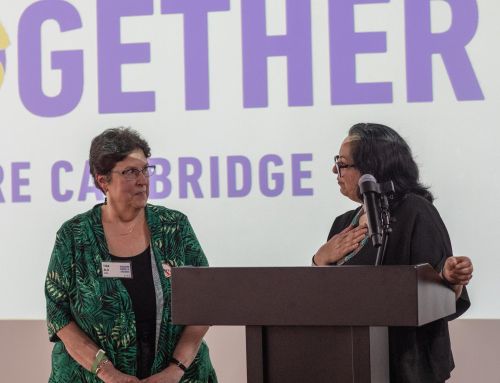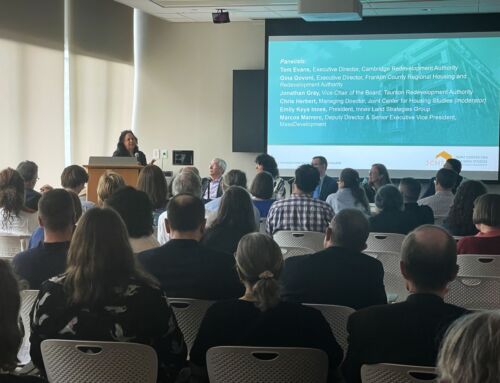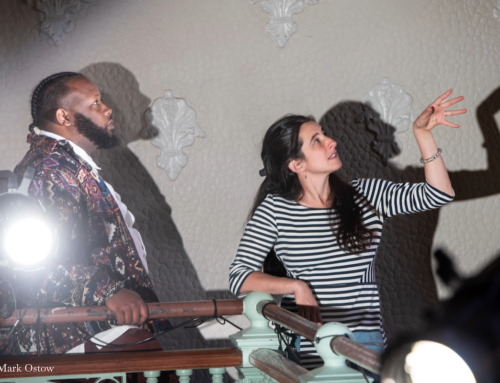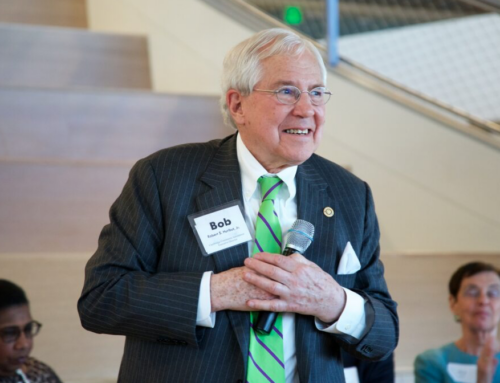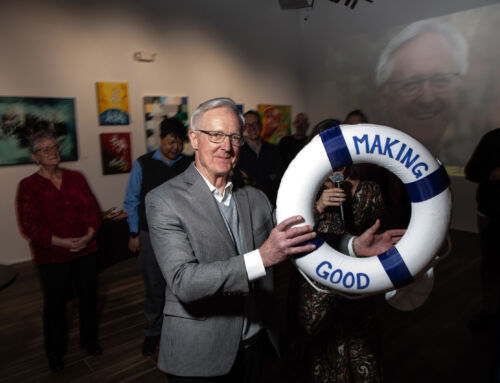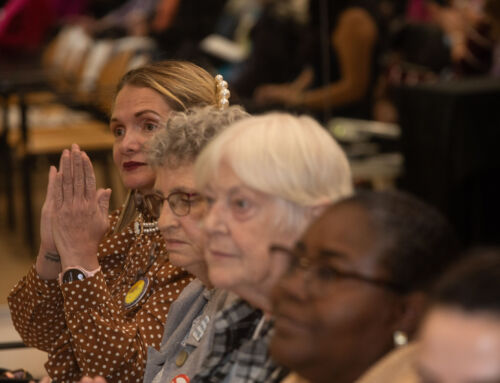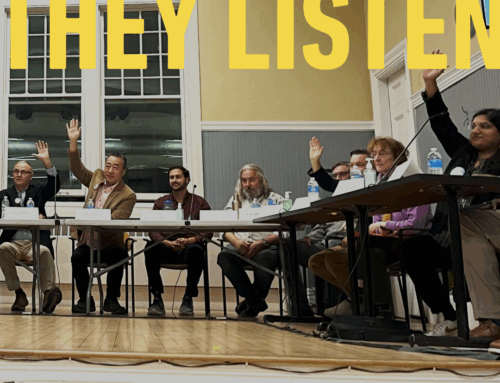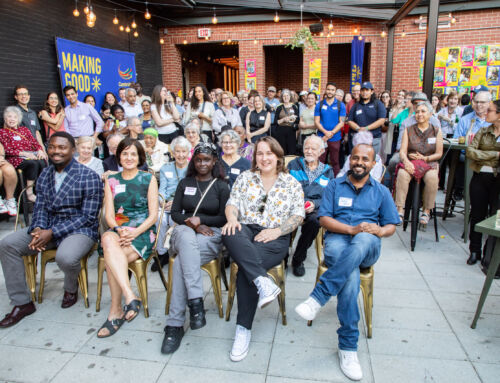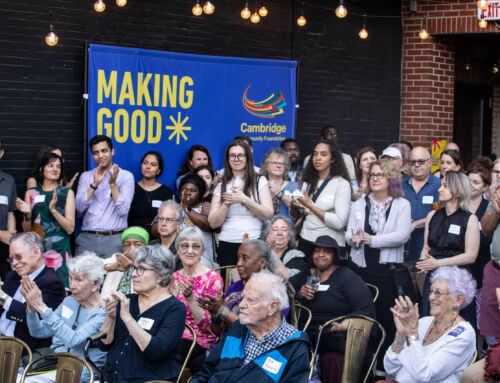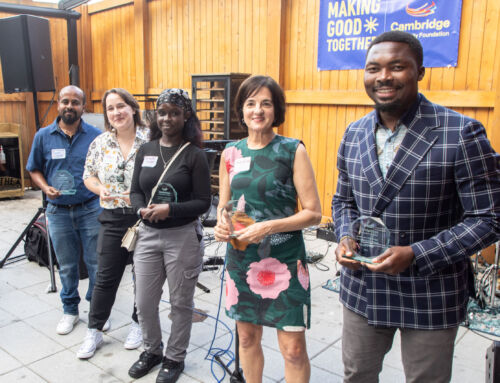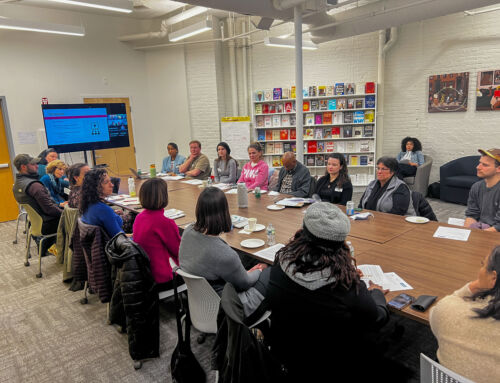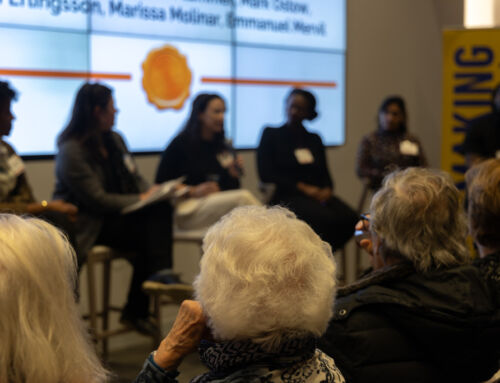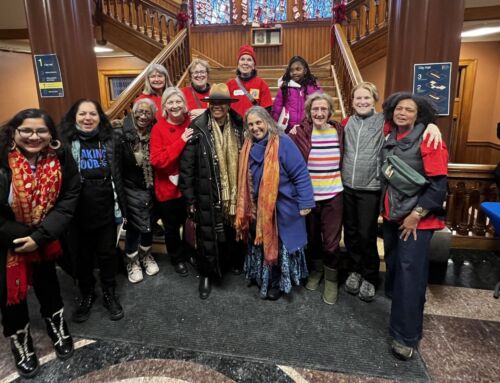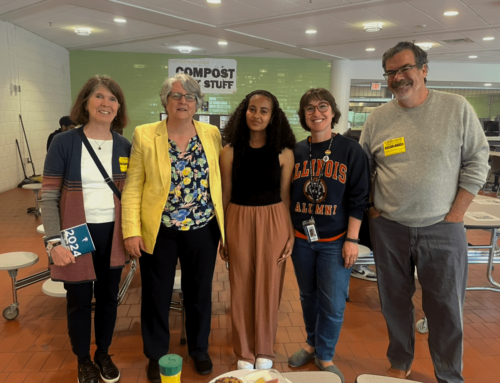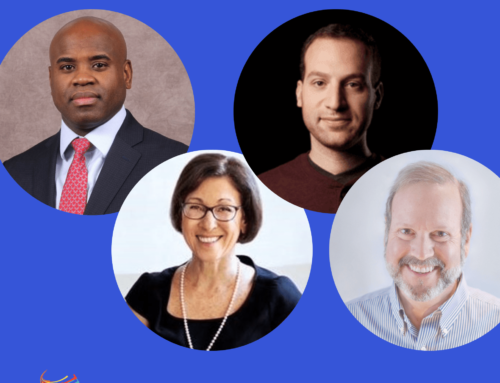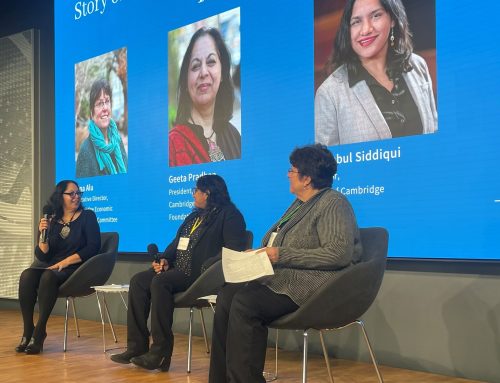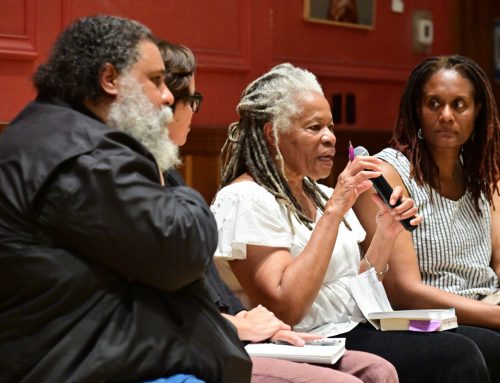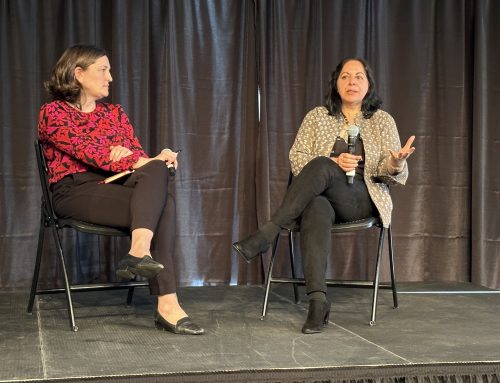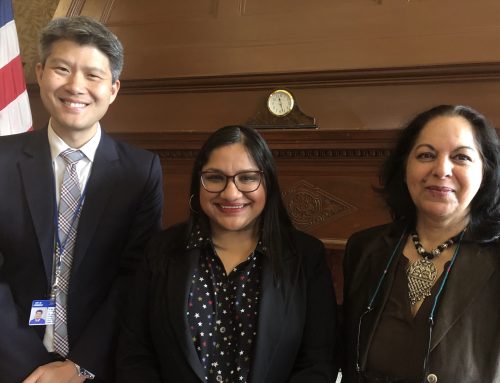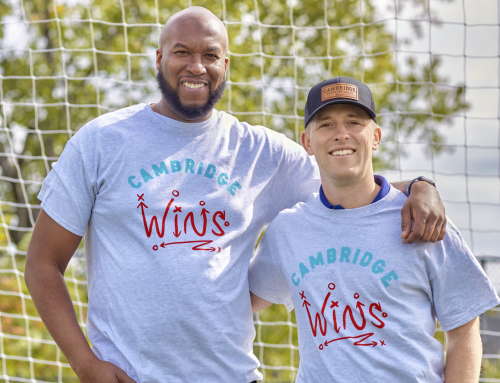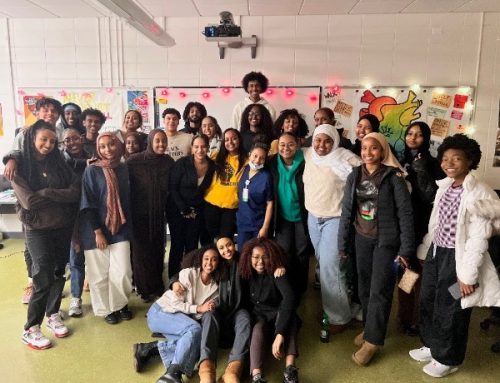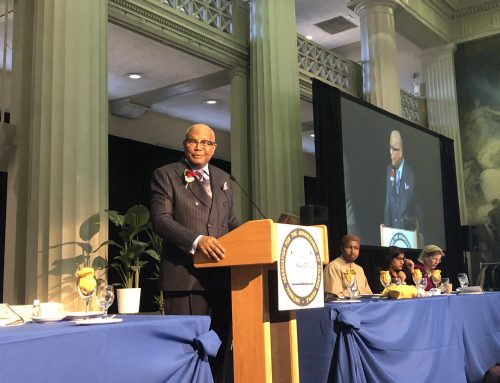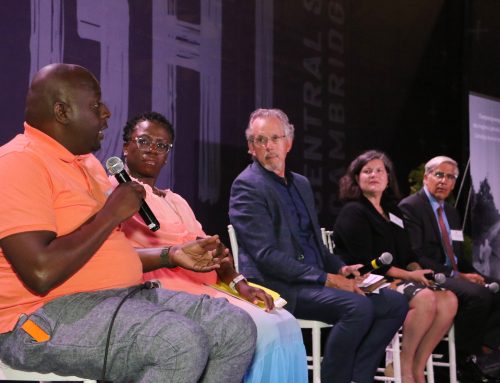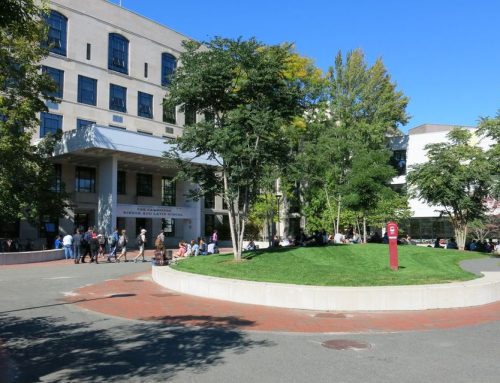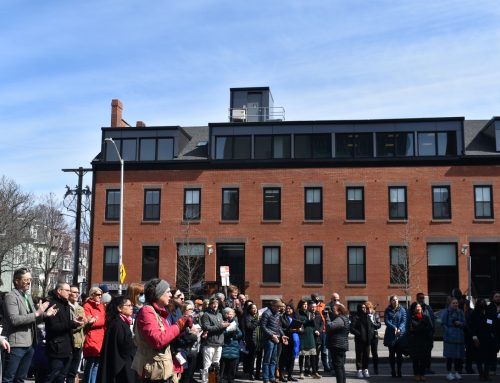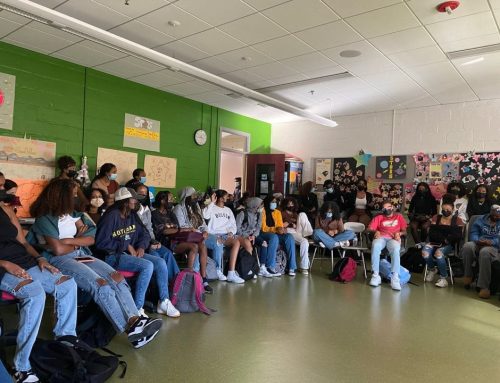
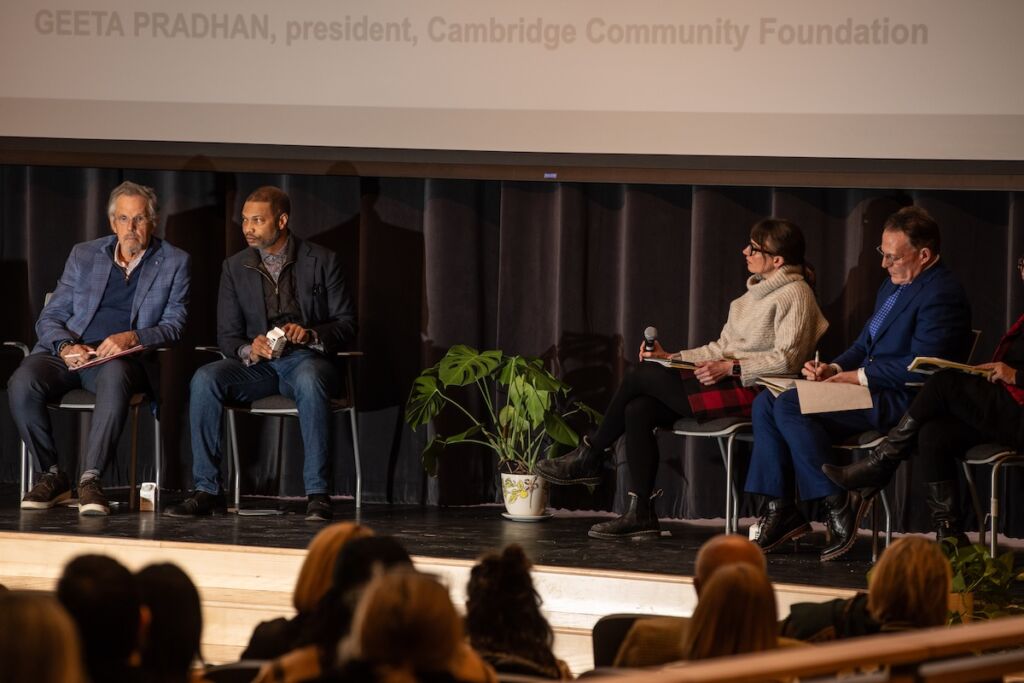
By most measures, Cambridge Public Schools are succeeding. And yet, for decades, deep-seated achievement gaps have persisted. On February 9, at a forum held at the King Open School, a panel of education experts and civic leaders expertly moderated by Co-President of My Brothers Keeper Cambridge Tony Clark gathered to discuss the complexity of the issue and confront an uncomfortable truth: the responsibility belongs to all of us.
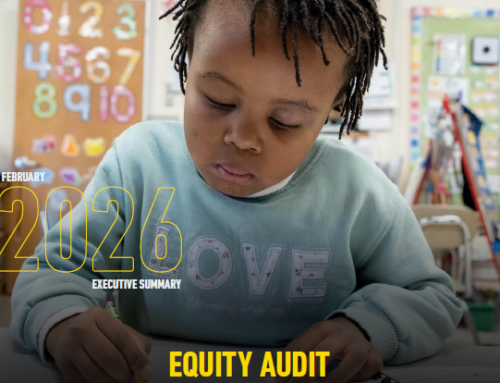
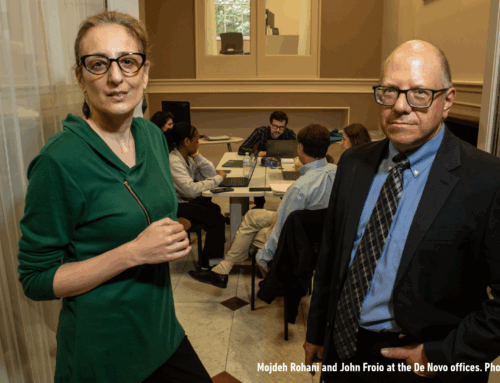
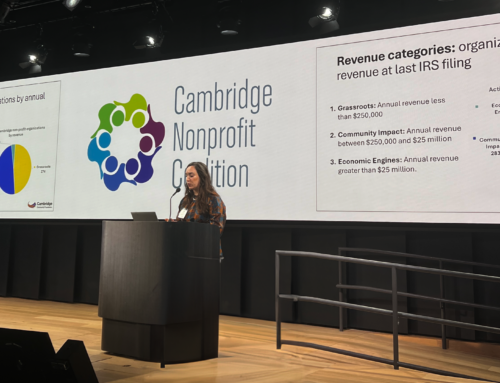
The topic of discussion was the THRIVE! equity audit that we commissioned in partnership with Cambridge Public Schools, a two-year effort to understand how the district uses their budget to impact the achievement and opportunity gaps. Despite one of the highest per-pupil spending rates in the state, CPS schools consistently underserve Black and Latino students compared to their white and Asian peers across every grade level as measured by annual assessments. THRIVE! Founder and CEO Dr. Omolara Fatiregun presented the audit’s findings and the five-member panel extended the conversation to surface the broader conditions our young people need to thrive.
Baldwin School Principal Heidi Cook put it simply: we need to listen to what our highest-need families are telling us. She acknowledged the fear that can come with this. Fear of vocal pushback, fear of making decisions that not everyone will support. “Sometimes we just need to be okay with coming up with a solution that is what our most marginalized families are saying they need,” Cook said, “and push past the fear.”
Superintendent David Murphy acknowledged the shift this requires: moving from an adult-centric system to a student-centered one. “What that means,” he said, “is making decisions that we know are grounded in improving student experiences, so that when you graduate from the Cambridge Public Schools, you have more opportunities.”
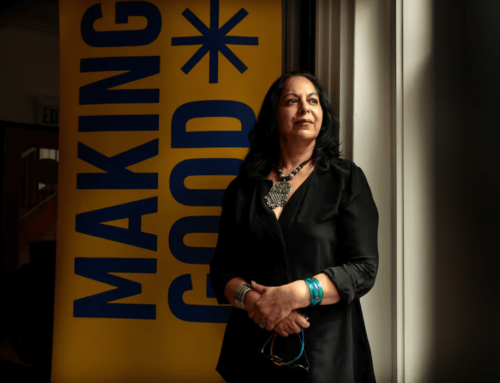
“We put the responsibility on schools to fix everything,” said CCF President Geeta Pradhan, “but there’s a role for our entire community to play.”
Harvard professor Paul Reville, former Massachusetts Secretary of Education, put numbers to the claim: children spend 80 percent of their waking hours outside school. Housing, nutrition, health care, family stability—these are what he called “the social determinants of education success.” Schools matter, but they can’t do this alone. “We need the whole village,” Reville said. “We need the entire community coming to the table.”
Reville pointed to a fact that should trouble anyone who believes in the promise of public education: “We have a straight-line correlation in this country between socioeconomic status and educational achievement. We believe in schooling and its power to equalize, but schools can’t do it alone,” he said. “We’ve got to figure out how to meet children where they are and give them what they need to flourish both inside and outside of school.”
So what does the village need to do? Start by listening.
Responding to the finding about chronic absenteeism, former Mayor Anthony Galluccio urged the district to go directly to the source: “You have to ask kids why they don’t want to be in school. We’re not going to solve this with academic jargon.” He spoke about the ways that race and class segregation become visible to students, especially in middle school—who sits together, who’s in travel sports, who lives in public housing and who lives in a $6 million home. “Kids see it,” Galluccio said. “Kids get it.”
Pradhan emphasized that the most powerful solutions emerge from the root of the problem, from those most affected by the issue. “If we are doing well with the kids who need the most help,” she said, “we will do well for everyone.”
The panelists returned repeatedly to the importance of alignment within schools, across the district, and between educators and families.
Former Boston Chief of Education Rahn Dorsey posed a foundational question: “What is the social contract that we are striking with students and families? What is it that we’re telling them we’re going to do for everybody? “Without that clarity, he warned, “we’ve got a bit of the wild, wild west.”
Cook spoke to what fidelity looks like in practice, using CPS’s literacy curriculum as an example. “We needed to go through a year of implementation to really understand the science behind it,” Cook recalled. After that foundation was solid, they began adapting. “This year’s theme is ‘jazz it up,'” she said. “But you have to trust the program first.”
That trust has to extend in all directions—from the central office to principals to educators to parents. Dorsey noted that adults in school systems can fall into “fiefdoms” and competing interests. “As much as we need a family conversation about what we want for all,” he said, “we need adults to act honestly and support the common cause.”
The challenge is imagining something new and building the public will to pursue it.
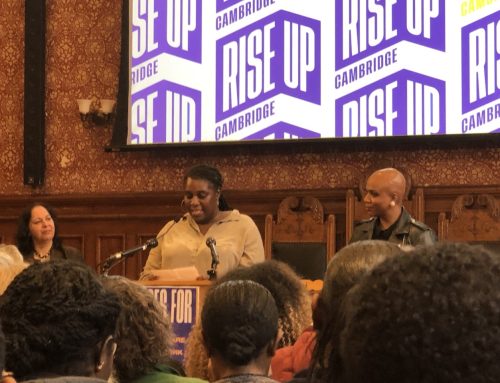
Dorsey offered one example of what that imagination might yield: “Cambridge may have already created one of the most powerful education interventions available: guaranteed income.” Guaranteed income programs like Rise Up Cambridge can contribute to family economic stability and a child’s readiness ready to learn.
Cook called for bravery: “Bringing voices to the table that might say things we’re not comfortable hearing. Making things transparent that we need to look at openly.”
Pradhan spoke to the foundation’s role in this work. “The role of a community foundation is to shine a light on issues and provide support where it will be most helpful,” she said. “This audit belongs to Cambridge.”
“We look forward to continuing last night’s discussion with principals and educators from all of Cambridge’s schools,” said Murphy. “So that we can do our part toward giving all the children of Cambridge the fulfilling futures they deserve.”
The timing is favorable. A new superintendent is in place. A new district plan is under development. And now there is a research-based roadmap with individualized guides for each of the district’s 17 schools available at cambridgecf.org/equity-audit.
The research is in. The conversation has begun. Now comes the work.