Families across Cambridge face crises that don’t fit neatly into single categories. A housing eviction triggers mental health struggles. Immigration fears prevent domestic violence survivors from calling police. Children are traumatized when they watch their parents get taken away and disappear into detention.
De Novo Center for Justice and Healing addresses these intersecting needs through an innovative approach that pairs free civil legal aid with mental health counseling, ensuring there’s no wrong door to help. Founded in 1970 and a Cambridge Community Foundation nonprofit partner since 1991, De Novo recently received a $50,000 grant from CCF’s Urgent Needs Fund to support their critical work. Last year alone, De Novo served 1,832 individuals across its immigration, housing, family law, disability and mental health practice areas.
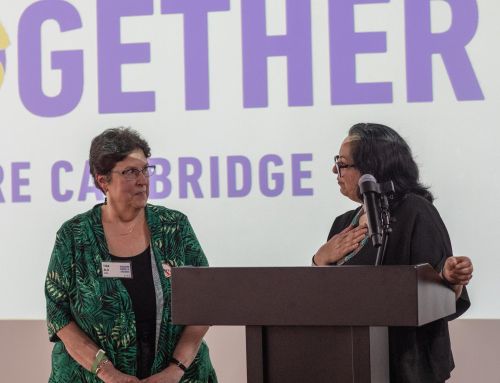
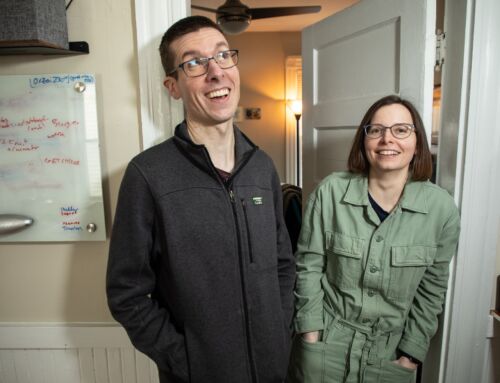
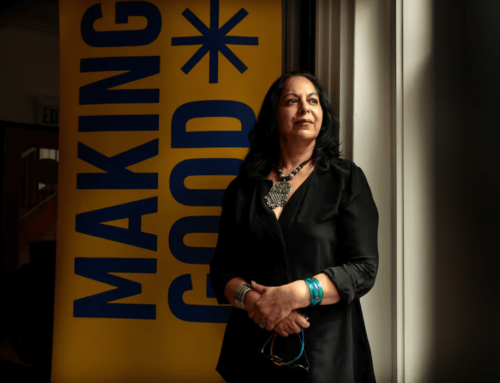
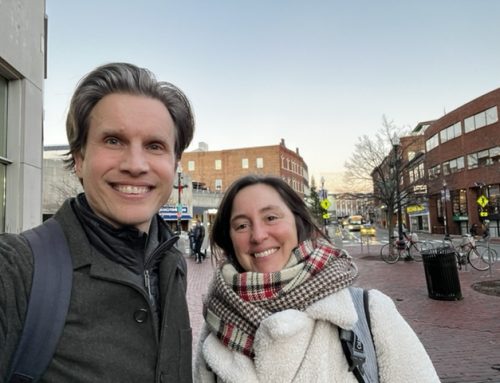
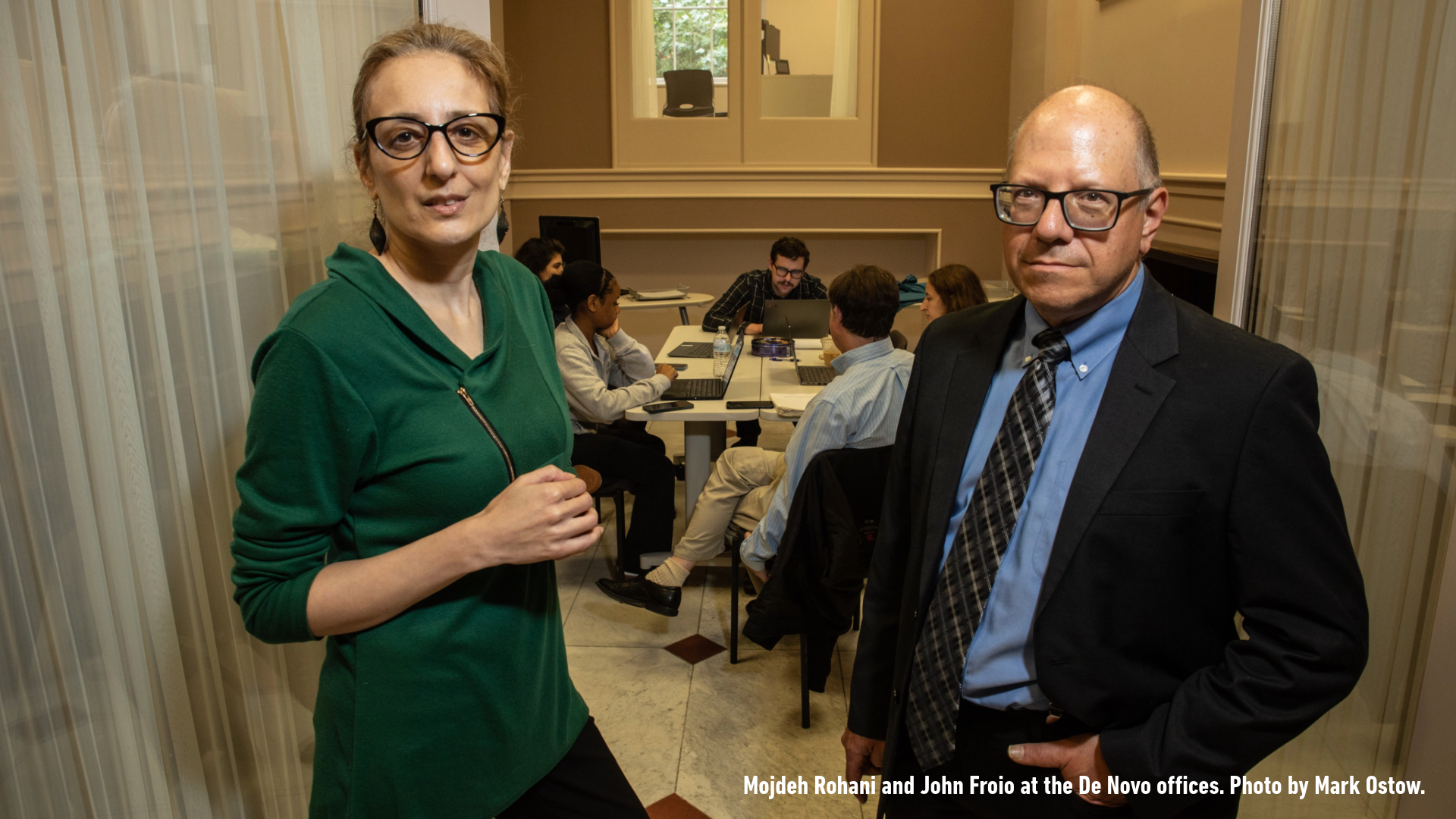
Executive Director and social worker Mojdeh Rohani emphasizes how their collaborative approach recognizes the complexity of their clients’ needs: “We don’t believe that everybody needs to be an expert on everything. The beauty is in the partnership.”
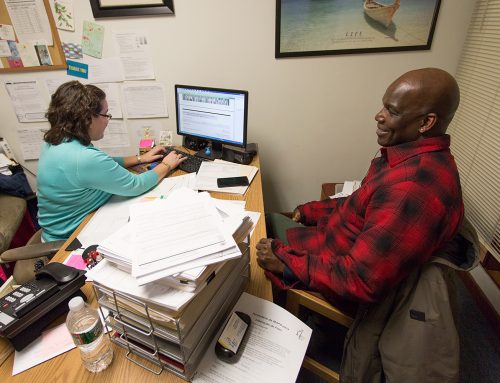
“I’ve become more like a social worker, and Mojdeh has become more like an attorney,” explains Deputy Director and attorney John Froio, describing how working side by side transforms their practice.
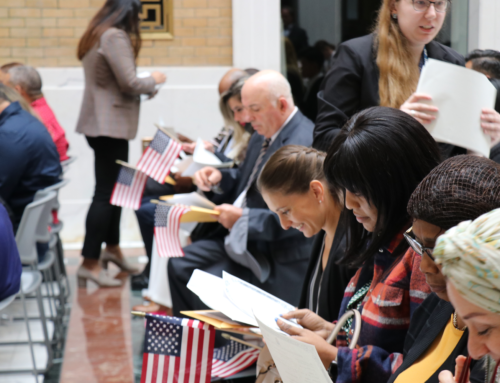
With immigration raids escalating and federal policies shifting daily, people are missing medical appointments, children are absent from school, and fear of police is suppressing reports of domestic violence and other crimes. De Novo has adapted quickly: expanding telecounseling, providing tablets to clients, and launching caregiver-affidavit clinics so parents can authorize a trusted adult to work with schools and doctors if they’re detained.
Policies now change “every day,” Froio says; their immigration supervisor reads new rules each morning “to see what draconian changes they’ve made.” Costs have spiked too: an asylum seeker’s first work permit application is now $550. Before, it was free.
De Novo’s reach extends beyond Cambridge: immigration and mental health services operate statewide, while housing, disability and family law focus on Cambridge and nearby cities. Capacity has grown to meet need: staff from 14 to 35, and a budget from roughly $900,000 to $4.2 million under Rohani and Froio’s leadership. In addition to ongoing support from CCF’s Community Fund, the recent Urgent Needs Fund grant directly supports De Novo’s client’s needs as they navigate the costs of a deteriorating safety net.
The work exacts a heavy toll. “Our staff feels very responsible,” Mojdeh says, knowing that for immigration attorneys and social workers, cases can be matters of life and death for their clients. “As leaders, we have a role in protecting our staff, so the staff can protect the clients.”
Their integrated approach recognizes what Cambridge families know: crises don’t come one at a time. When legal problems intersect with trauma, when housing insecurity meets mental health needs, De Novo makes sure there’s always a door open.