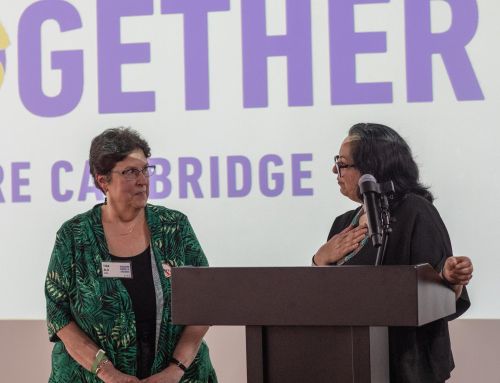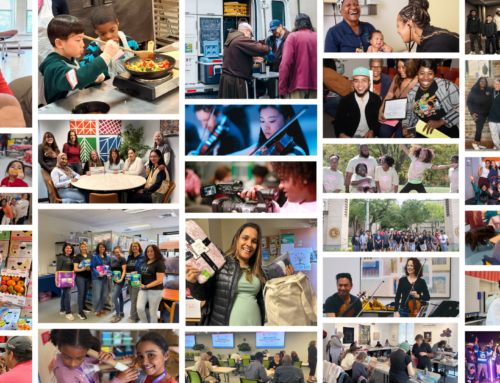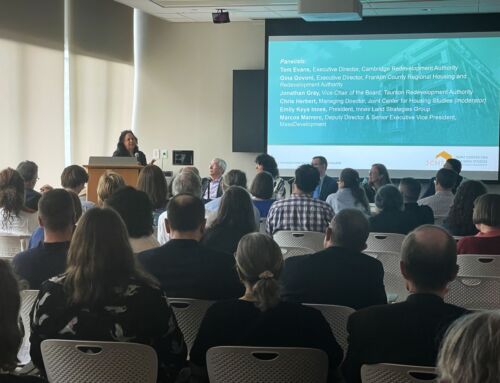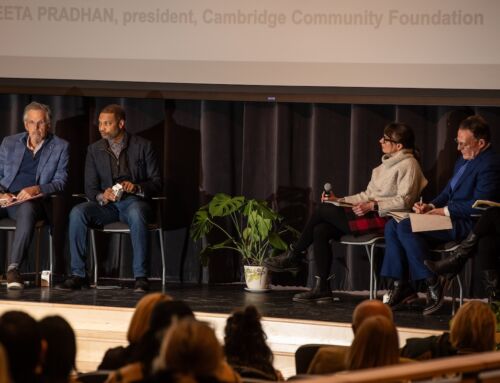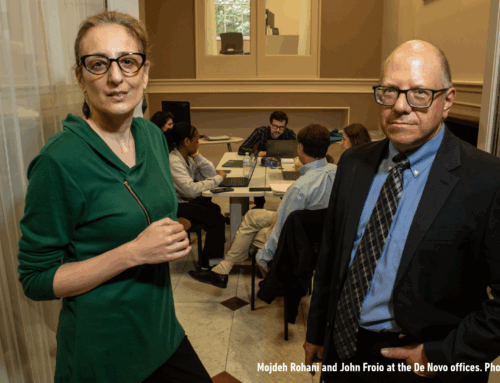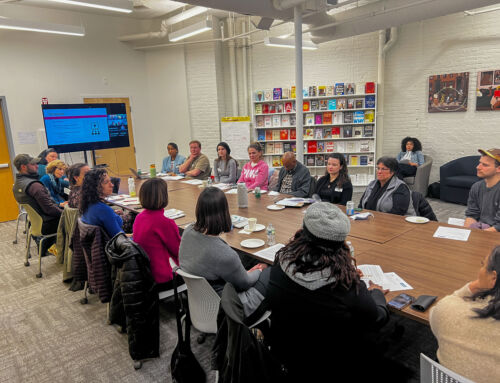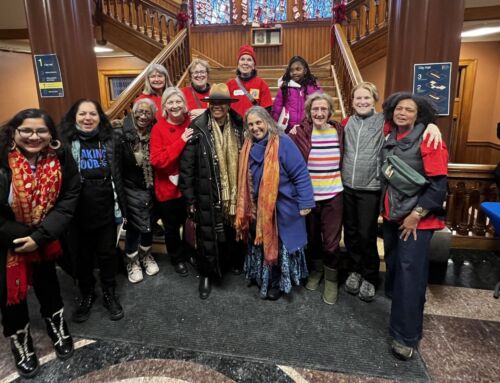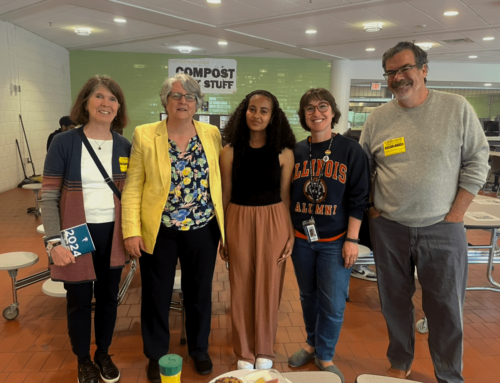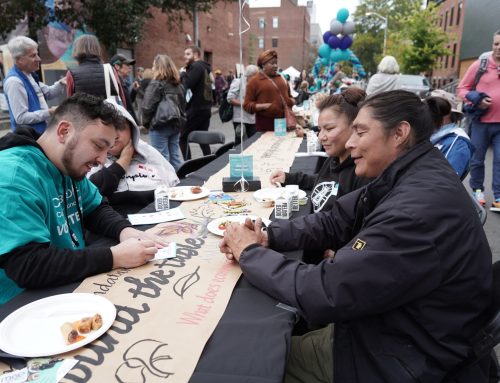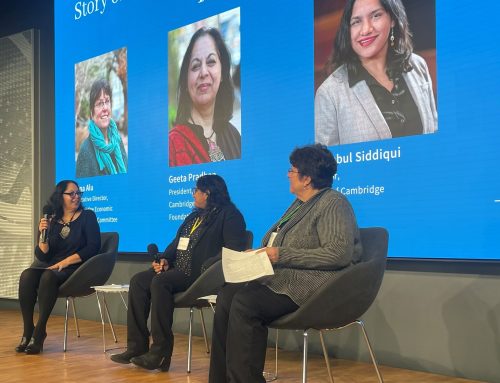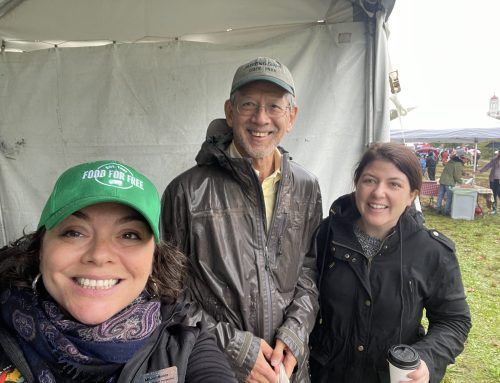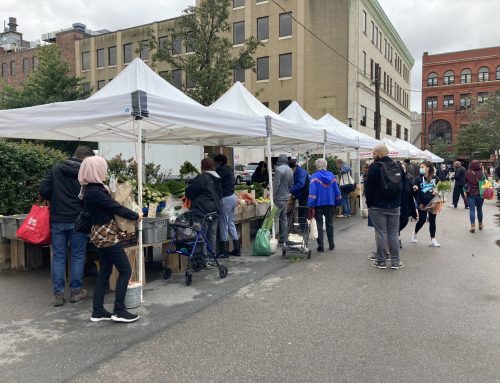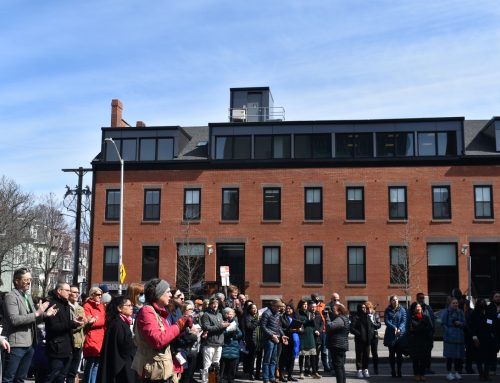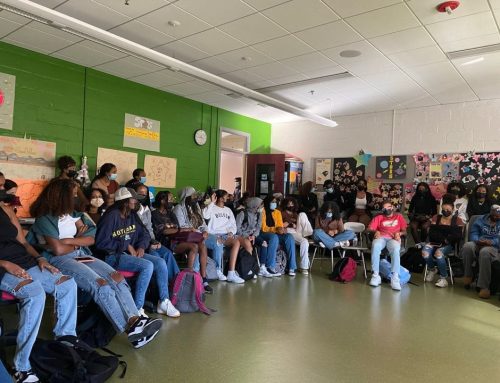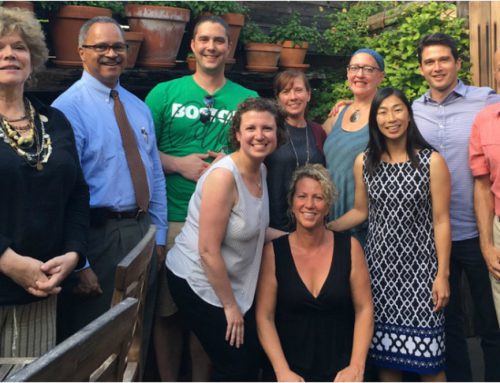
Last month, we gathered our food security partners around a table. Representatives from Cambridge Community Center, Margaret Fuller Neighborhood House, East End House, CEOC, Food For Free, and Mass Farmers Markets came together to reflect on two years of collaborative work through our Food Access and Security Initiative.
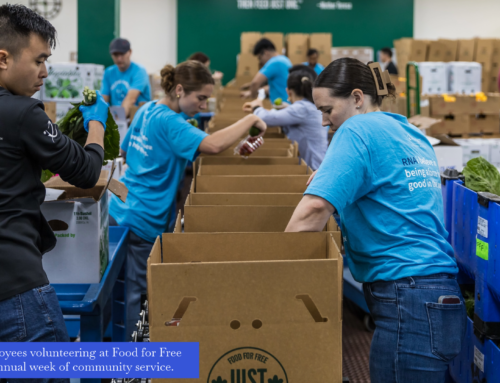
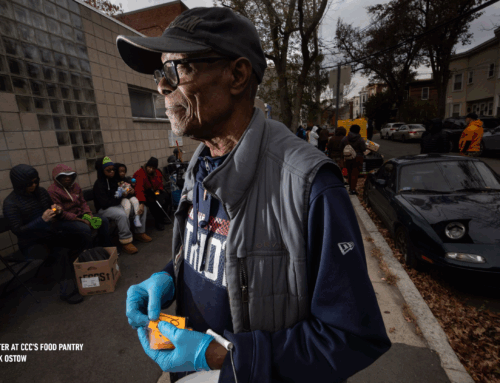
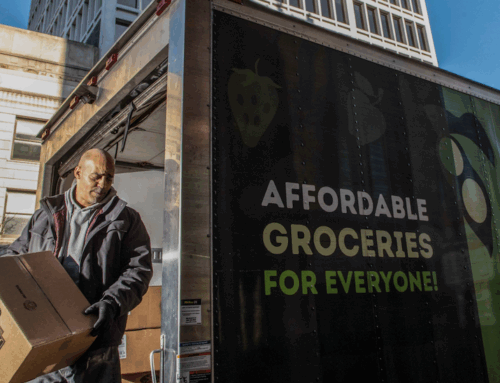
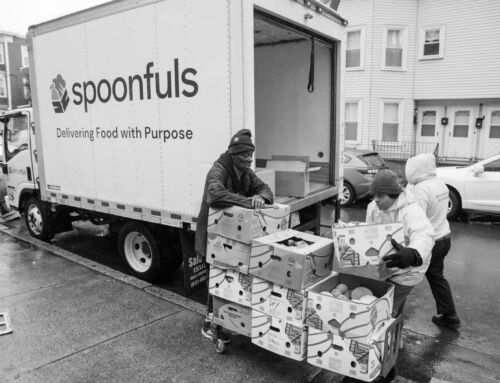
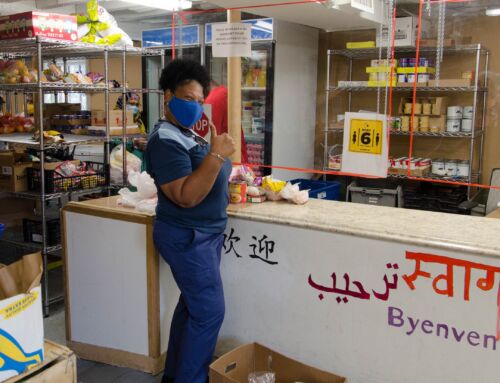
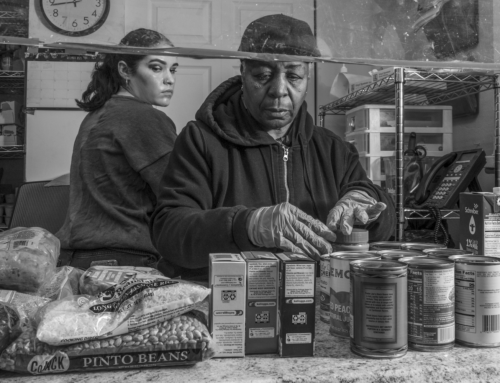
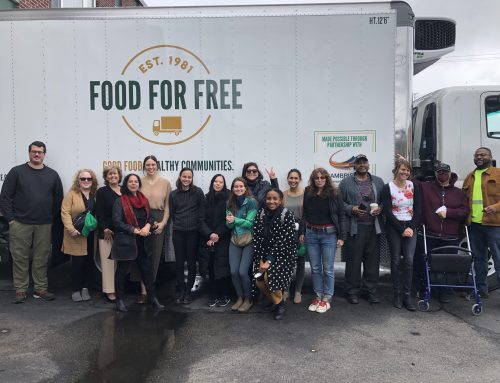
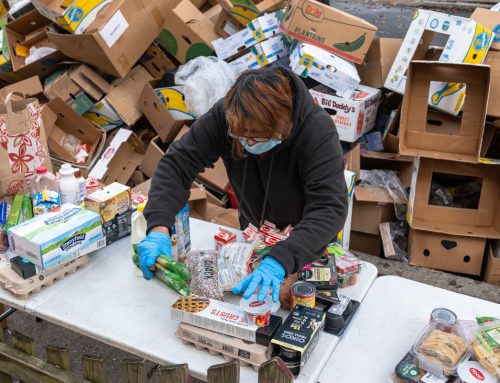
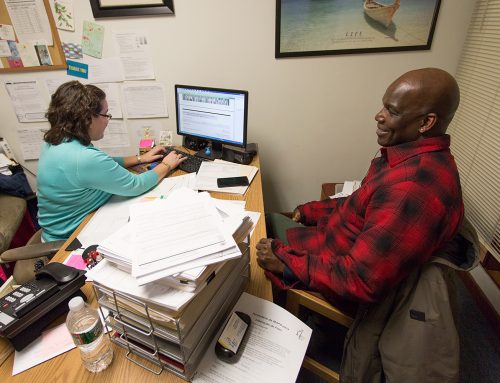
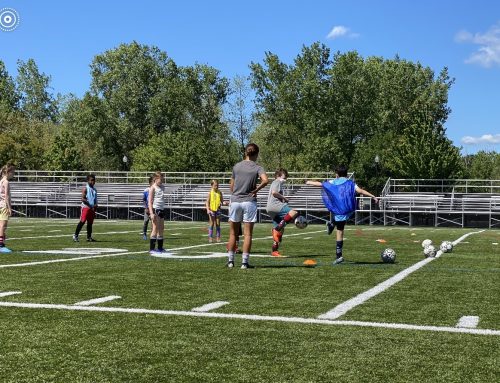
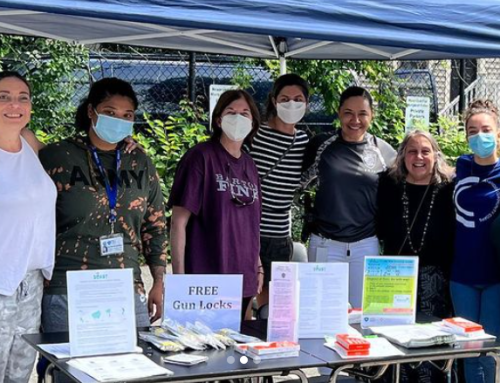
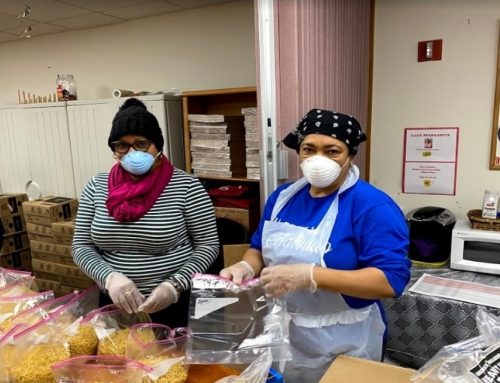
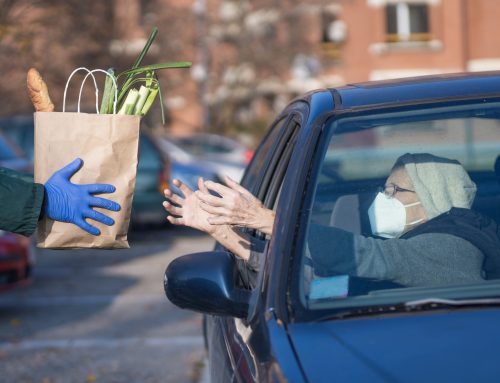
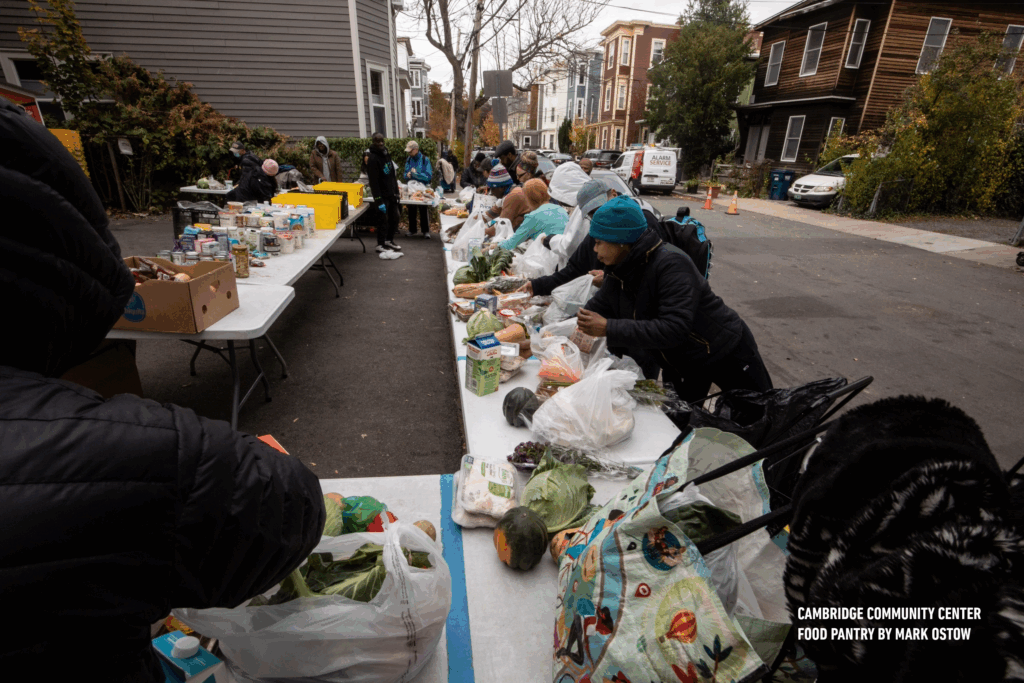
The conversation that day was both celebratory and sobering. Partners shared stories of progress: innovations like numbered ticket systems that replaced chaotic lines to solve for patrons waiting for hours in the cold, infrastructure investments that nearly doubled food distribution capacity at some sites. Margaret Fuller Neighborhood House now distributes 3,000 diapers monthly alongside food. Food For Free delivers nearly 14,000 boxes annually to Cambridge housing sites with help from 50+ weekly volunteers.
But partners also voiced worry. Federal funding cuts and fewer corporate partners were already impacting supply chains. Patrons were concerned based on news about potential policy changes to their benefits. Organizations were struggling to balance sharing information without inciting panic. And they asked us directly: what comes next?
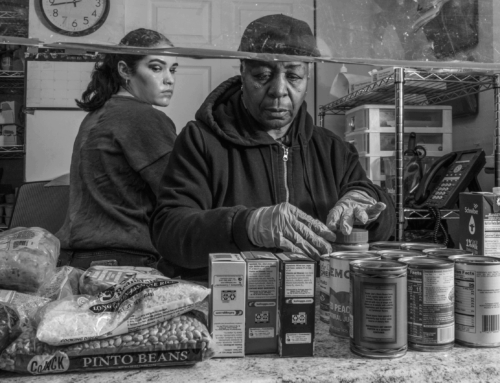
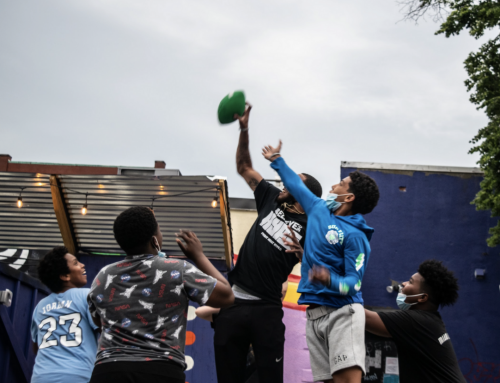
That question—what comes next—quickly became urgent. With SNAP under threat, Pantry visits surged—up over 200% in some cases. Families who had never reached out for help before were showing up. The fear that had been discussed was now translating into overwhelming need.
This is when partnership matters most. Because we’d spent two years building relationships with our nonprofit partners, strengthening capacity, and learning what works, we didn’t need to start from scratch. When the City of Cambridge reached out looking for partners to respond quickly, we already knew who was doing what and how they were doing it. And the community had already stepped up. Contributions to our Urgent Needs Fund meant we had resources ready to deploy.
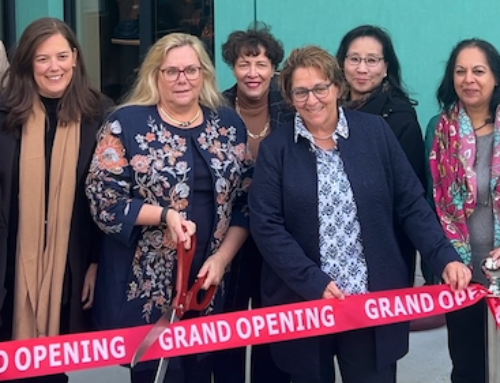
The result: within days, the City of Cambridge and CCF announced a joint $500,000 investment—$250,000 from each—to fight food insecurity amid the SNAP crisis. $200,000 supports the Cambridge Food Pantry Network to purchase food and expand capacity. The remaining $300,000 enables gift cards to local grocery stores for SNAP-eligible families with children, older adults, and Cambridge residents with disabilities, managed in partnership with CEOC, Cambridge Public Schools, Cambridge Housing Authority, and Cambridge Council for Aging.
This rapid response happened because we’d already made foundational investments. Years earlier, through Community Development Block Grant funding, we’d supported the purchase of refrigeration trucks, commercial freezers, and storage upgrades that now enable pantries to stock fresh produce and protein consistently. Those investments were strategic.
The pandemic taught us that emergency food systems are lifelines for many. Rising costs, inflation, economic instability—these pressures are ongoing for community members. So, we made a deliberate choice: invest in permanent infrastructure and build systems that could weather sustained need, not just respond to acute crisis.
But infrastructure alone is never enough. The real work of the past two years has been supporting sector communication, collaboration, and capacity building—helping organizations strengthen their operations and deepen their partnerships.
This is what it looks like when strategy meets urgency. When you’ve done the groundwork of relationship-building, when you’ve listened to the voices of the people who you serve, when you’ve invested in capacity building, when you have a compassionate group of donors concerned about the wellbeing of their neighbors—you can move fast when it matters.
Crisis doesn’t wait. Response time matters. Partnership makes it possible.
Help CCF stand ready to respond—donate to the Urgent Needs Fund.
—Christina Turner, Vice President of Programs and Grantmaking