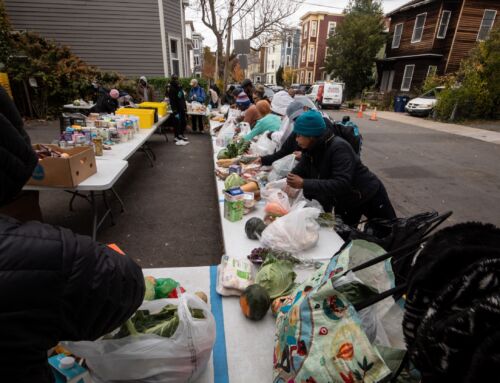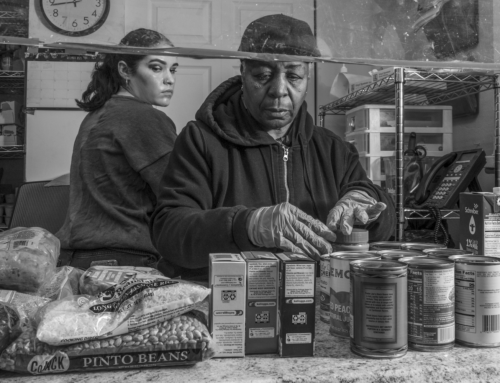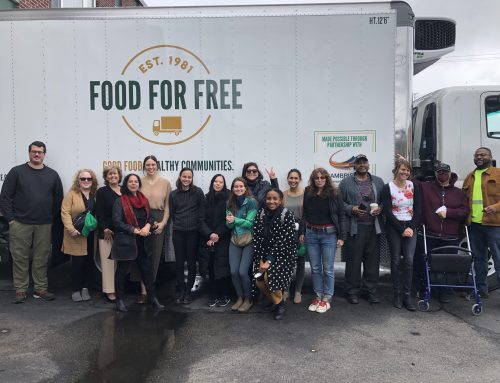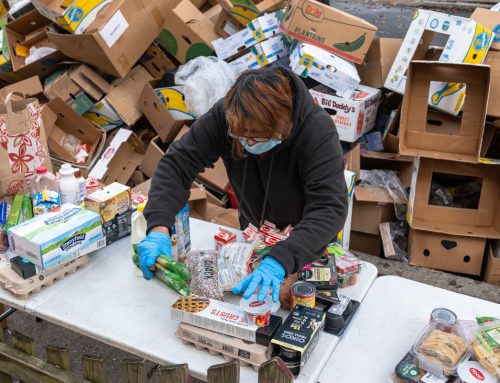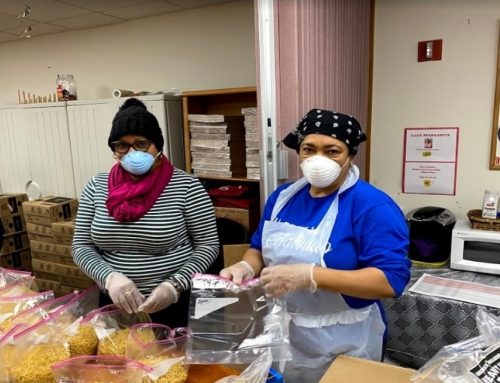
During the pandemic in March 2020, Cambridge Community Center (CCC) staff began calling families in their neighborhood to ask what they needed. The answer was clear: food and basic household goods. By April, CCC had launched a food pantry serving 20 families. By summer, demand had skyrocketed to 200 families a day.
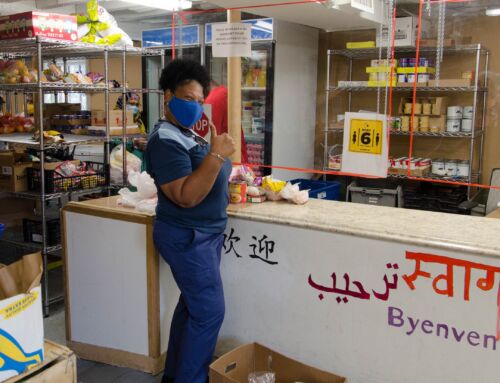
Last quarter alone, CCC saw 5,105 visits. Open Tuesday through Friday, 1-3pm, they distribute food to approximately 120 households per day. Partnership made that growth sustainable.
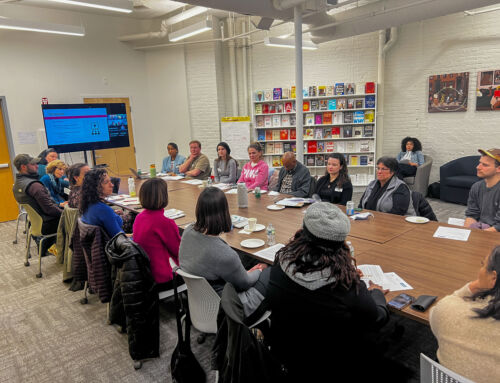
CCC’s evolution from emergency response to sustained operation was accelerated by the Cambridge Community Foundation’s Food Access and Security Initiative, an effort that has strengthened Cambridge’s food system through funding, shared strategies, capacity building, and creative ways to offer healthy food with dignity. The initiative created vital infrastructure and resources for food security partners to share knowledge, coordinate resources, and solve common challenges. “It’s really been an amazing resource for us to be able to share best practices,” says Zach Goldhammer, CCC’s director of engagement and partnerships.
One breakthrough came directly from this CCF-facilitated collaboration: the randomized number system. For months, people lined up as early as 8am for CCC’s 1pm opening, desperate to ensure they’d get food. “The line used to be around the block. And it broke our hearts to see people coming here at eight or nine in the morning in the cold waiting knowing that we didn’t open until one,” recalls Lawrence “LB” Battle, CCC’s operations manager. “With the number system, we were thinking about how we could break down some of the barriers.”
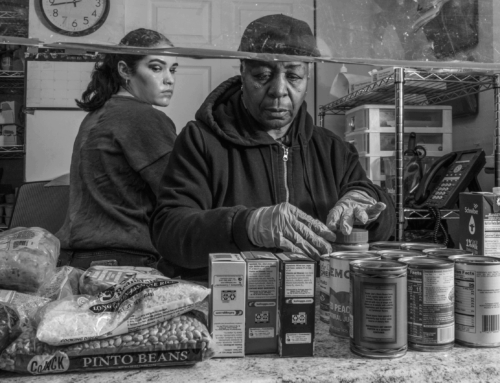
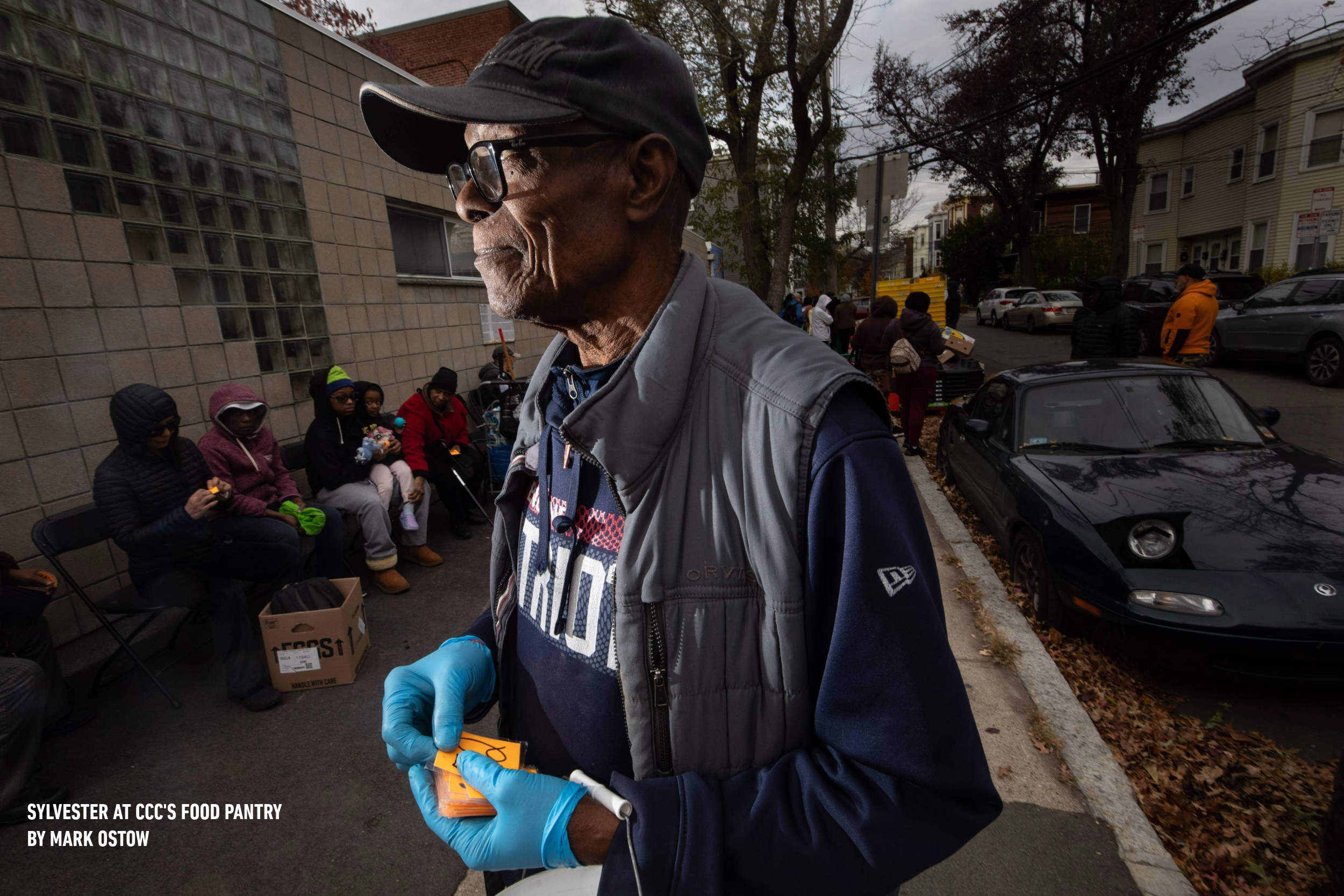
CCF funded More Than Food, a consulting program that suggested the randomized approach. Margaret Fuller Neighborhood House, another partner, had piloted it first. Through the Food Access and Security Initiative, CCC’s staff visited to observe, asked questions, and adapted the system for their own operation. Now, at 12:45pm daily, Sylvester—an 86-year-old volunteer who first came to the Center as a pantry client—distributes laminated number tickets he makes himself. Numbers are called in random order, eliminating the advantage of arriving early.
The impact was immediate and profound. “That line made me sad. People weren’t getting their food,” says Alice, a member of the Food Pantry Network’s Neighborhood Advisory Council, which uses a “secret shopping” model where pantry clients offer feedback based on their experiences. Alice persistently advocated for change in those meetings. “It’s so much better now. No more line cutting, fighting, arguing. It’s safer. It’s fairer. People get what they need.”
The Food Access and Security Initiative meetings serve another crucial function: they’re a support system for people doing incredibly difficult work. Through the initiative, Zach learned every pantry manager faces similar challenges navigating the tension between maintaining welcoming operations while managing complex logistics. “Even just having a safe space to talk through these common issues and realize that we’re not alone in this—that all of us are facing similar challenges—just having that resource is really helpful for my own motivation to keep doing this,” Zach says.
CCC has a no-questions-asked policy, requiring minimal information and no income verification. “I can’t even fathom what it’s like, in line four days a week,” LB says. “How could we say no?”
Alice understands the vulnerability firsthand. “When I moved to this country, I worked two jobs. I worked hard. But I don’t have a lot for retirement, and so I need food,” she explains. “I joined Neighborhood Advisory Council because I want to protect people. Elderly people. Cambridge people.”
“I don’t think of this as a charity site. I think of it more as this site of solidarity,” Zach says. “It’s a place where people are building collective power together and advocating for their own needs—not just from us, but from the city, from their neighbors.”
Many CCC staff were once patrons themselves. Sylvester transitioned from client to volunteer during the pandemic. “I talked to Zach, and I said ‘I know I can help you all because I see the people and what they need,'” he recalls. “One of the things I love about working here is that it takes the stress off me. I can’t sit home doing nothing all day.”
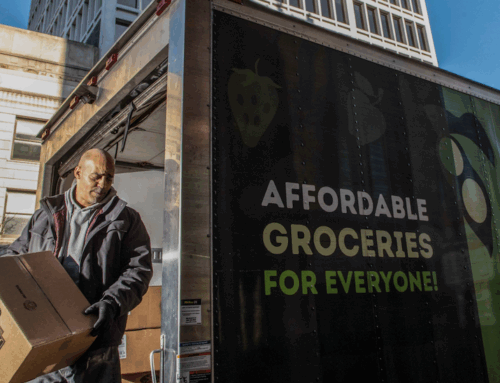
Through the initiative, pantries coordinate strategically to serve different needs: CCC maximizes fresh produce and can store pallets in their gym space, while others operate as grocery-style shops offering more choice.
Five years ago, CCC was making emergency calls to neighborhood families. Today, they’re part of a coordinated food security system that’s become essential infrastructure for Cambridge and the region. The challenge ahead is daunting, with inflation driving demand back to pandemic levels and federal support uncertain. But the foundation is strong: monthly meetings, shared solutions, patron leadership, and a commitment to showing up, four days a week, with dignity and without judgment.
As Sylvester prepares his laminated number tickets each day, he’s participating in a model of mutual aid where those who receive help also give it, where innovation comes from collaboration, and where the measure of success is whether people get what they need, safely and fairly, without waiting in the cold.